Art Can Heal Africa's Colonial Wounds: Akoto-Bamfo Speaks
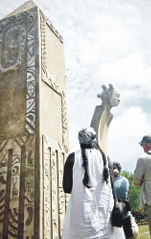
Funerary art encompasses various artistic works linked to burial customs and ceremonial rites aimed at paying tribute to the departed and embodying societal views on mortality and the hereafter. These artworks can typically be discovered in tombs, graveyards, and memorials.
For countless years, prior to the advent of contemporary cameras, the Akans—a significant and prominent ethnic group in Ghana—recorded family portraits of their departed relatives via sculpting.
This tradition functioned as a culturally significant way to honor African ancestors up until colonialism interfered with and disrupted the art form.
Like so many practices it disturbed and stigmatized across much of Africa, ancestor veneration has often been misportrayed. Just like any other culture's beliefs, the Akan people regard death as a transformation into the spiritual domain of ancestors, where existence persists in a different manner.
Patterson examines the journey mapped out by artist and educator Kwame Akoto-Bamfo, whose work aims to reignite an appreciation for conventional African burial customs via his artistic expressions and educational initiatives. \xa0
A Yale academic and alumnus of Kwame Nkrumah University of Science and Technology, Kwame Akoto-Bamfo asserts that art and cultural expressions have the potential to mend Africa and its inhabitants, aiding them in overcoming the repercussions of colonialism and slavery.
At his extensive Nkyinkyim Museum, Akoto-Bamfo works to revive threatened artistic traditions. He gained widespread recognition in 2015 when a series of online promotions led to the unveiling of a major exhibition in Cape Coast. The 'Nsiso' pieces made their debut during Ghana's celebration of its 60th year of independence.
In 2019, when he launched his museum venture with his nonprofit organization called the Ancestor Project, his aim was to create a haven where individuals of African heritage could undergo restorative healing via art and educational experiences.
Situated 180 kilometers away from Accra in Nuhalenya-Ada, the museum’s yearly Ancestor Veneration ceremony has successfully completed the cycle of rituals surrounding African traditional funeral arts.
The Sacred Zone now includes a vast array of distinctive heads within an ever-growing assortment set to total 11,111 entries. This signifies power when combined, as harmonious spiritual energies converge.
People visiting the Sacred Area are advised to follow traditional customs such as taking off their shoes, tapping gently before going in, doing libations, and avoiding selfies and photos that could trivialize or commodify important funeral artwork.
“I am Akan, so my Nsiso began with Akan traditional rites; but currently our ceremonies have opened up to other African ethnic groups, including the Ga-Dangme, Yoruba, Ewe and African Americans in the diaspora,” says Akoto-Bamfo.
In expressing his thanks to the Adibea of Ada at the third annual Ancestor Worship ceremony in October 2024, he honored "all the Ga-Dangme royalty, Ewe royalty, Yoruba royalty, and members of the African diaspora for their support in reviving our sacred funeral traditions and rituals."
Artistic creations like funerary art serve the purpose of honoring and commemorating those who have passed away. These artworks frequently act as conduits for guiding individuals toward an afterlife, embodying societal views about mortality. This category includes various types such as statues, mausoleums, pieces of jewelry, ornamental items, and even buildings designed with specific aesthetic intentions.
Funerary art from Akan Nsiso shares similarities with Ife and Benin bronze heads from the 13th century. As noted about the funeral effigies found in Nkyinkyim, "They are depicted using different tribal styles along with highly realistic techniques." Regarding his hyper-realistic funerary depictions, the artist commented, "Many believe these ultra-detailed portraits lack an African influence, which is incorrect. Haven’t you observed the works from Ife and Benin?"
The numerous rituals conducted near the portrait heads finalize the ceremonies that render these portrait heads sacred. The Nkyinkyim Museum hosts an Ancestor Veneration ritual—a kind of festival organized and backed by the Adibea royalty along with different African royal families. They guarantee that the spirits represented by these ancestor portraits receive nourishment and tribute during this event.
Chief Nene Titrim Buertey III, the founding leader of Adibea, comments on the program stating, "This initiative holds great significance for both Africans and those from the African diaspora as they come together to gain deeper insights into their heritage, practices, and cultural legacies." This statement barely scratches the surface regarding its importance. He further explains, "There are members of our family within the diaspora scattered across various locations unknown to us."
Akoto-Bamfo’s global perspective on restoration and healing has wide-ranging effects. The Nkyinkyim Veneration ritual now serves as a stage where we can express ourselves, ensuring that all our kin worldwide understand and listen to us, recognizing the existence of 'Adibiawe' in Africa.
“My son’s ashes are buried here, I won’t miss this ceremony for the world,” says Judith Carroll, an African American woman who attended the 2024 ceremony in October. Of his success thus far, Akoto-Bamfo says: “We have been able to, over the years, un-demonise African drums, African music and even African hair. Our traditional systems and especially healing art still carry a lot of that negative stigma. There are now a whole lot of supporters in the African diaspora, besides my team and me, willing to shed light on our traditional systems.”
Provided by Syndigate Media Inc. ( Syndigate.info ).
Comments
Post a Comment