China Unleashes Military Might: Rare, Large-Scale Missile Drills Echo Across Gobi Desert
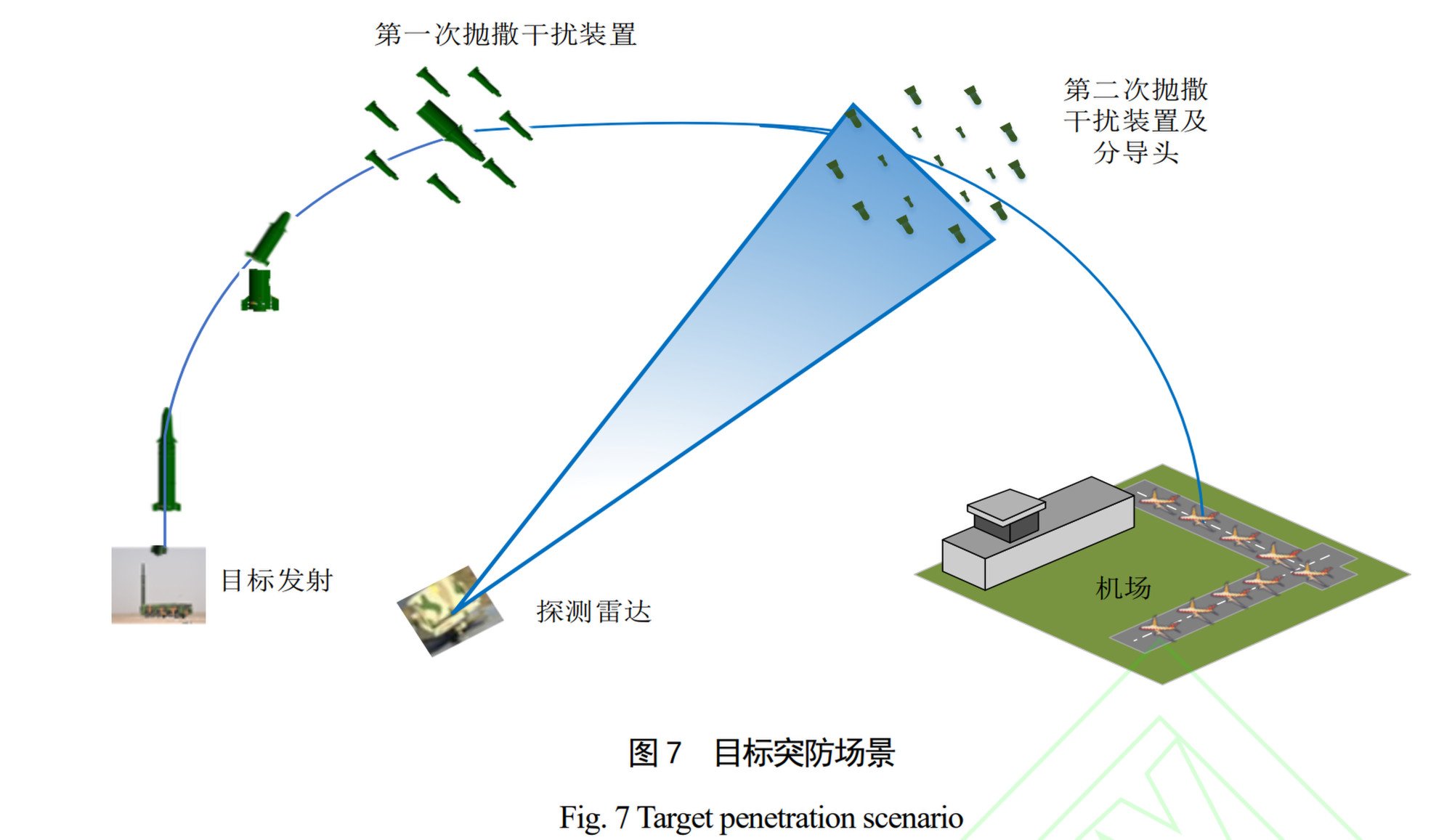
In a subtle showcase of its advanced technology, China's People's Liberation Army ( PLA ) has conducted a missile defence test in the Gobi Desert where as many as 16 ballistic missiles They were directed at a singular target to evaluate a state-of-the-art radar system’s capability to counteract saturation assaults.
The unmatched scope of the test – uncommon even on a global scale military capabilities - indicate Beijing's rising assurance in its ability to tackle sophisticated challenges and assert supremacy in a progressively fraught global political environment.
A study released on February 18 by Zhang Zhenbiao, a senior engineer from the PLA’s 63623 Unit based in Jiuquan, Gansu province, revealed that all missiles were effectively identified and monitored using a novel dual-band (S/X) phased array radar system prior to their accurate impact on the designated targets with full precision.
Are you looking for insights into the most significant issues and global developments? Find your answers here. SCMP Knowledge Our latest platform features handpicked content including explainers, FAQs, analyses, and infographics, all provided by our prestigious team.
The system accomplished what the Chinese military did scientists characterized by "timely identification, exact quantification, and precise documentation" — key factors in countering sophisticated threats such as hypersonic glide vehicles or missiles equipped with countermeasures and multiple independently targetable reentry vehicles (MIRVs).
The test, detailed in Flight Control & Detection, a Chinese-language journal, marks the first public disclosure of China's land-based early warning radar capabilities.
The system’s dual-band technology—akin to the U.S. Navy's USNS Howard O. Lorenzen missile-tracking vessel—merges broad-area monitoring (S-band) with detailed target acquisition (X-band).
Although the Lorenzen stands out due to its exceptional capabilities, capable of tracking over 1,000 targets at once, the U.S. government has not showcased its effectiveness in actual combat scenarios through public demonstrations.
In October 2024 More than 30 Iranian ballistic missiles breached the defenses of Israel, an ally of the United States, hitting the Nevatim Airbase and revealing weaknesses in sophisticated missile defense systems. Despite being powerful, Israel’s U.S.-supported Arrow system found it challenging to distinguish between different threats amid the overwhelming assault, as reported by several American news outlets.
This is a situation that the Chinese military specifically recreated. Gobi Desert trial.
As stated in Zhang's research, the PLA’s system is capable of monitoring both standard ballistic missiles and differentiating between decoys and real warheads during flight. This includes scenarios where mid-course maneuvers such as jamming or deploying submunitions are employed as countermeasures.
According to Zhang and his collaborators, "The capability of the radar to continuously track 31 decoys and secondary targets, all while giving priority to seven high-priority threats," represents a significant advancement in countermeasures against saturation attacks.
Additionally, firing 16 ballistic missiles during one drill underscores the substantial expense involved, indicating China’s commitment to significantly bolstering its military preparedness.
Ballistic missiles Stay as some of the costliest weapon systems, and such an onslaught is barely witnessed outside of wartime exercises.
In 2023, the Chinese state television network CCTV aired video from an automated missile manufacturing facility. This broadcast was broadly seen as a statement directed at global audiences, with special emphasis on conveying this information to the United States about expanding arsenals within China.
The completely automated facility, referred to as a "lights-out factory" by certain military analysts, indicates that the PLA might quickly restock its weaponry at a lower expense, thereby changing the "balance of deterrence" in possible confrontations. Taiwan or the South China Sea.
More Articles from SCMP
Hong Kong has been encouraged to eliminate civil service benefits, following expenditures of around HK$300 million on holiday incentives.
What insights can we gain from the case of the Hong Kong girl who died due to shaking?
Trump could end up making Asia, not America, great again
Joao Moreira pursues additional top-level success in Japan
The article initially appeared on the South China Morning Post (www.scmp.com), which is the premier source for news coverage of China and Asia.
Copyright (c) 2025. South China Morning Post Publishers Ltd. All rights reserved.


Comments
Post a Comment