How Alibaba Is Becoming China's AI Leader and a Crucible for Entrepreneurs
Liu Zhu Mingming, an engineer with experience at Alibaba Group Holding , left in 2014 to found his own venture, Rokid. The start-up, which develops smart glasses, was backed by angel investors that included Vision Plus Capital, formed by Eddie Wu Yongming and others before Wu became CEO of Alibaba in 2023.
Ten years down the line, Rokid has become one of the leading tech startups in Hangzhou, which happens to be Alibaba’s hometown in eastern China. In recent times, their AR glasses, fueled by AI technologies, have gained significant attention online and in financial markets, propelling Rokid into prominence as the “seventh little dragon” within the region, akin to how others rose before them. "six little dragons" that included DeepSeek and Unitree Robotics .
"In a recent interview, Zhu mentioned that he spent four years as an engineer at Alibaba, where he mostly filled in his knowledge gaps." He also noted that this period helped him gain insights into marketing, operations, and finance.
Are you looking for insights into the most significant issues and developments globally? Find your answers here. SCMP Knowledge Our updated platform features handpicked content including explainer articles, FAQ sections, detailed analysis, and informative infographics, all provided by our acclaimed team.
Zhu and his startup illustrate how Alibaba is fostering the growth of China’s artificial intelligence sector via individuals who previously worked for the firm, notably those based in Hangzhou. As of December 2024, according to data from the Chinese platform ITJuzi, eighty-five AI startups were established by ex-Alibaba staff members, with forty-five percent located within the same city. It should be noted that Alibaba has ownership stakes in the South China Morning Post.
Although e-commerce continues to be the backbone of Alibaba’s operations—with platforms like Taobao and Tmall generating most of its income and profit—the firm, founded by Jack Ma in 1999 in Hangzhou, is progressively seen as an enabler of entrepreneurial activities via its artificial intelligence technologies rather than just being an online market operator.

Although DeepSeek, the startup established by Liang Wenfeng, has attracted attention with its budget-friendly yet highly efficient devices, the laboratory—which comprises roughly 200 young researchers primarily engaged in R&D—is not as well-equipped to provide user education regarding these offerings.
Compared to others, Alibaba stands out both as a leading innovator through its proprietary Qwen models and as a crucial facilitator of artificial intelligence initiatives. Boasting approximately 200,000 employees, Alibaba has established itself as an excellent collaborator for governmental bodies, academic organizations, and public sector companies looking to implement AI programs.
As the country's largest cloud service provider, Alibaba is uniquely positioned to offer AI solutions to factories and businesses across China. Meanwhile, its Quark platform has quickly emerged as a popular consumer choice for accessing AI models, competing with ByteDance's Doubao and Tencent Holdings' Yuanbao .
As per Su Lian Jye, the chief analyst at research firm Omdia, 'Alibaba has emerged as one of China’s top players in artificial intelligence,' particularly noted for being the frontrunner in providing foundational models for generative AI.
To cement its position, Alibaba is making an unprecedented level of investment In China’s artificial intelligence sector, the company pledged 380 billion yuan (approximately US$52.4 billion) in March towards funding computational capabilities and AI infrastructure development over the coming three years. This investment represents the most substantial financial commitment made by a privately-owned Chinese firm for such a technological initiative.
According to Kenny Ng, a strategist at Everbright Securities International, an increasing number of Chinese domestic firms are anticipated to announce their investment strategies, which could bolster China’s position against the United States in the artificial intelligence race. Ng highlighted that one critical battleground will likely involve the creation of AI models, particularly regarding whether proprietary systems or open-source platforms might offer greater advantages.
Since September 2023, Alibaba’s shift toward artificial intelligence has accelerated with Wu taking the helm as CEO from Daniel Zhang Yong. Under Wu’s leadership, “AI-powered, user-centric” became the primary strategy for the corporation, emphasizing the importance of both the cloud division and the core e-commerce operations.
During the company's latest earnings call in February, Wu said Alibaba's primary focus was to develop artificial general intelligence, defining it as the point at which AI can achieve 80 per cent of human capabilities.
Alibaba's now-retired founder Ma has also expressed optimism about the potential of AI "Looking ahead, the impact of AI over the coming two decades will be unimaginable from our current viewpoint, ushering in an even more significant era," he stated at a ceremony held towards the end of last year to commemorate the 20-year milestone of the company’s fintech division.
Alibaba's stock price has gained 50 per cent this year, although it remains less than half of its peak price in late 2020.
Qwen2.5-Max, one of the company’s top-tier models, secured the third spot among China-originated large language models (LLMs), according to Chatbot Arena, an evaluation initiative spearheaded by researchers at UC Berkeley. The ranking placed it just behind DeepSeek's R1 and its enhanced version, V3.
After releasing its newest deep reasoning model, Qwen 2.5-Max, the company asserted "comprehensively outperformed" In specific benchmark evaluations, Alibaba had intended to release the updated version of Qwen later this month. the Post has reported .
The leading Qwen models, largely available as open source, have aided Alibaba in securing a notable position within the emerging industry. Despite the excitement around competitor DeepSeek, numerous players worldwide have acknowledged this development. top-ranked open-source models are indeed derived from Qwen.
Based on Alibaba’s most recent statistics, their open-source models have facilitated the creation of more than 100,000 derived models by international developers. This achievement positions Qwen as the leading open-source model ecosystem, outpacing Meta Platforms’ Llama initiative and underscoring its extensive acceptance within the worldwide artificial intelligence community.
A recent case involved Li Feifei, the esteemed Chinese-American "AI goddess," collaborating with scholars from Stanford University to Train a reasoning model for less than $50 Using Alibaba's Qwen models, as mentioned in a research paper released in February.
Alibaba's artificial intelligence efforts have heavily relied on open-source approaches. During recent statements, Chairman Joe Tsai has consistently highlighted the advantages of utilizing open-source technology.
The transition to open-source models, fueled by the rapid emergence of DeepSeek's offerings, could result in the democratization of AI. This development would enable "individuals to implement AI models across various infrastructures at their discretion—be it within a data center or directly onto personal laptops," as Tsai articulated in an op-ed featured in the Post.
Alibaba is also placing significant bets on its RISC-V chip initiative , which produces chips using the fifth-generation Reduced Instruction Set Computing (RISC), a design approach for streamlined central processing unit (CPU) architectures.
In February, Damo Academy, which serves as the group’s cutting-edge research division, unveiled its new initiative. first server-grade CPU This has the potential to expand local applications of open-source chips developed using the RISC-V architecture, thus mitigating the impact of US technology limitations.
Experts remain hopeful regarding the possible contribution of the open-source RISC-V architecture in aiding China overcome US attempts to hinder its AI advancements via export restrictions.
"As DeepSeek challenges OpenAI’s dominance with its open-source, cost-effective, and high-efficiency benefits, RISC-V shows considerable promise during the AI era," noted analysts from Guotai Junan Securities in a recent report.
One significant obstacle for Alibaba in scaling up its computing resources is the increased US sanctions targeting China’s artificial intelligence and semiconductor industries.
Analysts have suggested that the intensifying technology competition may be one of the external factors driving Chinese Big Tech companies to invest in AI amid increasing US restrictions.
As a leading Chinese AI company, Alibaba is expected to continue pushing the boundaries of AI development to compete with the West, according to Ray Wang, a Washington-based analyst specialising in US-China technology competition and the AI and semiconductor industries in Asia.
Chinese artificial intelligence companies are rapidly promoting AI usage nationwide via their platforms and are intensifying efforts to develop AI infrastructure not only domestically but also internationally.
Alongside prominent technology companies like Tencent, Baidu, and ByteDance, along with rising startups such as The Beijing-based company Zhipu AI and the Shanghai-headquartered firm MiniMax - each pursuing distinct AI strategies - China's AI ecosystem was poised for significant advancements in talent development, infrastructure expansion, commercialisation and innovation, Wang said. Zhipu AI and MiniMax have both received funding from Alibaba.
Still, existing and coming US restrictions on AI hardware, including AI chips, are likely to limit China's access to advanced computing resources. While this may hinder China's AI development, it could also drive innovation within its AI industry, Wang noted.
Amid the tech rivalry, various Alibaba divisions across the organisation have been vying for global AI talent, according to company announcements, job listings and local media reports.
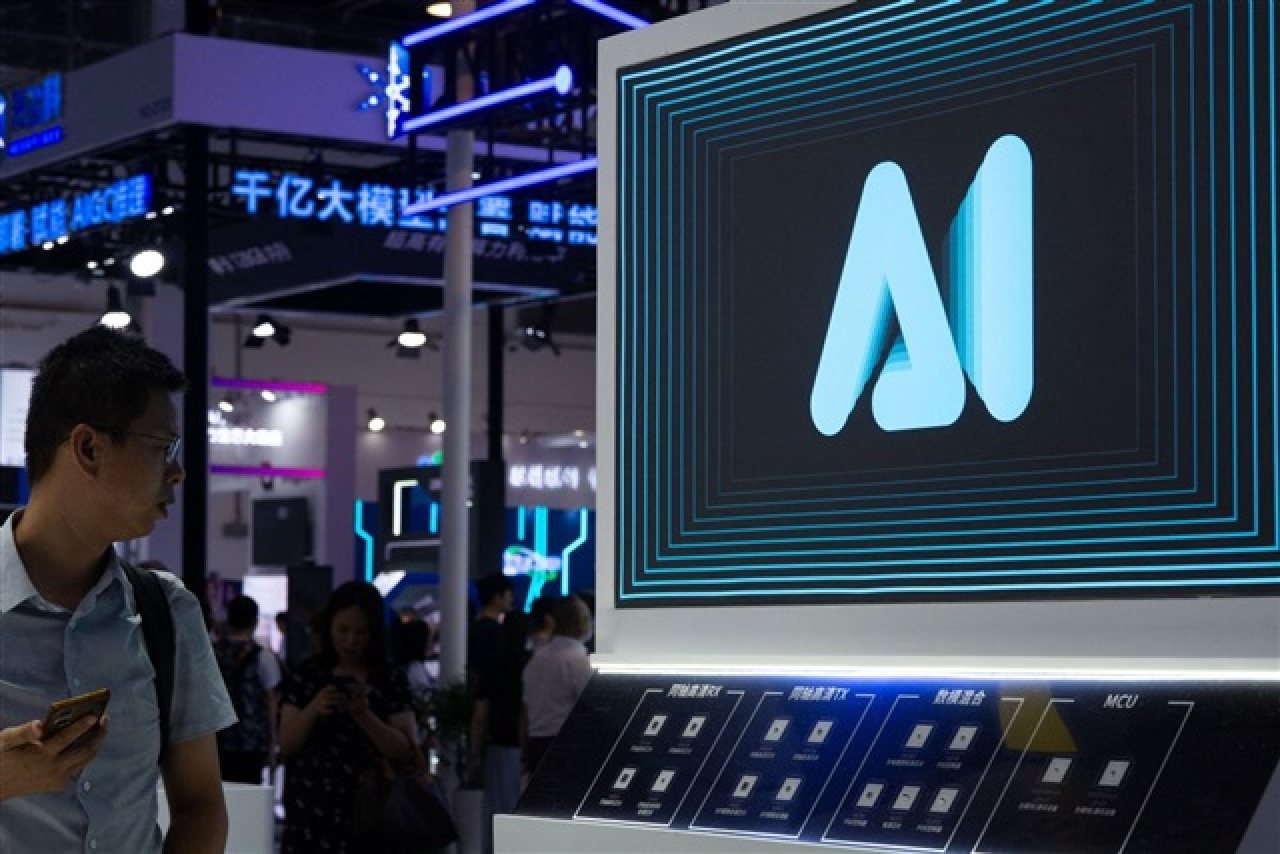
Half of Alibaba's over 3,000 internship openings for fresh graduates were AI-related, the company said in late February at the start of its spring hiring season.
Certain divisions within some companies exhibit a significantly larger share of AI-focused jobs. For instance, at Alibaba Cloud, where the corporation has aggressively advanced artificial intelligence initiatives, over 80 percent of roles are centered around AI-related tasks.
"As a tech firm dedicated to exploration and innovation, Alibaba is stepping up its initiatives to draw in and nurture AI professionals," stated Jane Jiang Fang, the chief people officer.
Alibaba Cloud has initiated an AI Clouder program aimed at attracting international talent from leading educational institutions both within China and abroad. These include universities such as Peking University, Tsinghua University, and Zhejiang University, along with prestigious American institutions like Stanford University and the Massachusetts Institute of Technology. This information was reported recently by National Business Daily, a Chinese state-supported business newspaper.
The report indicated that researchers experienced in creating large language models, multimodal models, AI applications, and AI infrastructure will be the main targets for hiring. Those who have authored high-quality research papers or contributed to significant open-source AI initiatives may qualify for more competitive compensation packages.
As Alibaba races to attract fresh talent, numerous ex-employees find that the motivation they acquired during their tenure at the tech behemoth persists well beyond their departure.
"Alibaba Cloud fosters a strong culture of encouraging employees to share their ideas during the development process," said Wang Jie, who worked at Alibaba Cloud for four years before leaving in 2022.
He stated that the firm stays highly accessible for interactions with previous staff members and occasionally asks them to return for discussion panels.
Rokid's Zhu stressed that a key lesson he learned from Alibaba was the importance of teamwork.
He mentioned that before joining Alibaba, he subscribed to the idea of individual heroism. However, he now believes that when a team excels in organization and culture, average people can accomplish remarkable feats.
More Articles from SCMP
Does China’s ‘epic response’ to Trump tariffs signal end of hopes for meaningful talks?
As tensions escalate in Taiwan, civil defense turns into a precarious balancing act.
South Korea's Jeju Island faces unrest due to an increase in crime with the returning influx of Chinese tourists.
Trump extends TikTok deadline to divest, says China is ‘unhappy’ about tariffs
The article initially appeared on the South China Morning Post (www.scmp.com), which serves as the premier source for news coverage of China and Asia.
Copyright © 2025. South ChinaMorning Post Publishers Ltd. All rights reserved.

Comments
Post a Comment