Revolutionizing Wind Power: Innovations for Smarter Turbine Designs
Solar has outpaced wind as the renewable energy leader. But recent innovations, like taller towers and longer rotor blades, could unlock significantly more wind energy potential — though not without challenges.
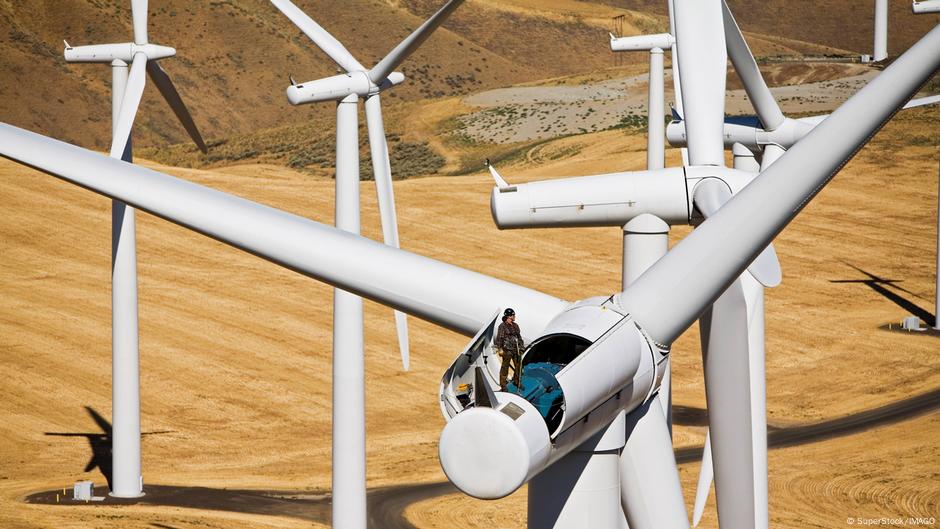
Energy-generating wind turbines have come a long way since the first-known example was built in the late 1880s.
What started as a 10-meter-tall (33 feet) construction in a back garden in Scotland has evolved almost beyond recognition, into towering structures dotted across land and seascapes around the world.
Over the last 20 years, they have grown from a standard height of 100 meters to more than 245 meters. Some models are now capable of generating as much as 18 megawatts of electricity in offshore projects where wind is plentiful, compared with just 2 megawatts in 2000.
There's a simple reason for this growth spurt: improved efficiency. Wind speeds are both stronger and more consistent at higher altitudes, which equals greater electricity production.
Taller towers also allow for longer rotor blades, which can capture more wind with their larger blade area.
Doubling the blade radius, for example, can produce up to four times more electricity, according to one calculation. And larger blades, in turn, are more easily set in motion by low-speed winds, making such turbines of potential economic interest to manufacturers.
These low-wind turbines require an investment that is approximately 35% to 45% higher compared to traditional models. This increase is mainly because they use additional materials and custom components. However, research conducted by scientists at the Technical University of Denmark, led by climate and energy Policy professor Marie Münster has determined that these models might considerably broaden the geographic scope. wind energy , making it valuable in areas previously deemed unsuitable.
Münster stated that these new designs might also boost capacity, enabling energy producers to utilize them for more production. clean energy source in previously unfavorable weather conditions.
"When there is a lot of production, or wind power, then electricity prices go down, which means that your income as a wind turbine owner goes down," she told inspiriences. But by using wind turbines that can run at lower wind speeds, when electricity prices are potentially higher, producers could increase their output — and revenue.
However, these bigger blade designs are still under development, and prominent wind turbine producers have not indicated their willingness to discuss potential near-term introductions.
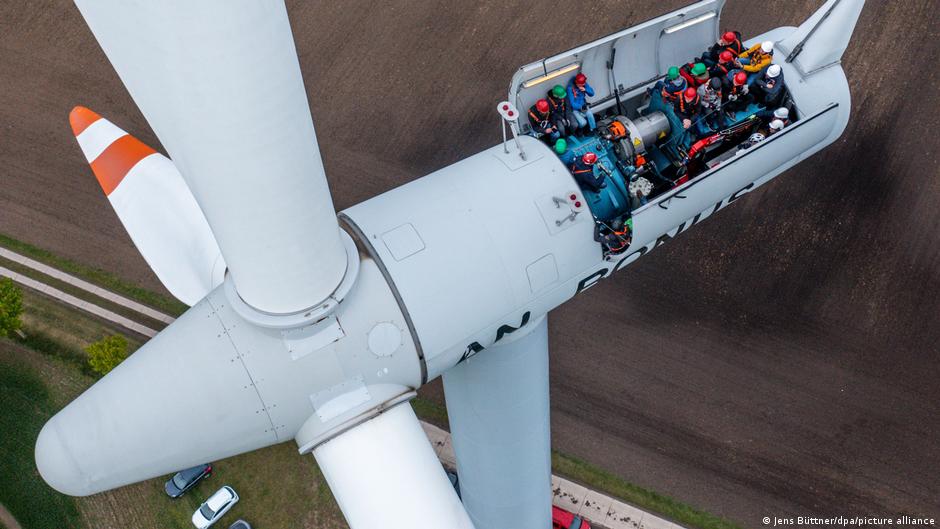
Designing large wind turbines presents various challenges.
Stature is merely one constraint impeding the expansion of wind energy. Experts are additionally exploring the technological hurdle of enlarging other parts of turbines, such as gearboxes.
Housed in the central nacelle, which sits at the middle of the spinning blades, these massive units can weigh up to 40 tons. They channel the rotational force created by the wind into the generator, which converts the kinetic energy into electricity.
Larger wind turbines necessitate stronger gearboxes; however, the space within the nacelle is restricted. Due to this constraint, engineers are designing more potent and compact gearbox models aimed at reducing the overall size of the turbines without increasing their load-bearing requirements.
Thorsten Fingerle, who leads technical product management at German gearbox company Winergy, mentioned that they have managed to double the power output of their gearboxes without enlarging them by substituting ball bearings—used for minimizing rotational friction—with an extremely thin film of lubricant.
Fingerle predicts that future offshore wind turbines could grow to have capacities of up to 30 megawatts in the next few years – nearly twice as powerful as current average models – though he noted that these sizes bring additional constraints into play.
Moving such large turbine pieces is challenging due to the limited width of roads and bridges. For instance, rotor blades often exceed 100 meters in length—comparable to the span of a soccer field. One possible approach to this logistical issue involves dividing the blades into shorter segments that can be assembled later; however, this method isn’t without drawbacks.
"Segregated blades simplify transport and enable maintenance, yet they present certain design difficulties," explained Enno Petersen, an authority on rotor blades at the Fraunhofer Institute forWind Energy Systems located in northern Germany.
Petersen pointed out that when the blade sections are attached using bolts, they form a series of concentrated masses. This configuration may lead to bending risks and could impact energy production levels. An alternative approach involves using adhesive; however, obtaining a robust joint in an outdoor setting poses challenges not encountered in well-regulated manufacturing facilities.
"At the site, you'd require a fairly substantial workshop to accomplish that," stated Petersen.
He mentioned that extra expenses related to assembling these modular blades might offset any potential savings. According to certain calculations, this could mean a 20% rise in construction costs compared to just a 5% decrease in transportation expenses.
Due to extra costs and technical uncertainties, blade manufacturers like LM Wind Power in Denmark told inspiriencesthey weren't betting on segmented blades just yet.
In Germany, wind power tops renewable energy sources.
Although the wind industry confronts various design issues, it is simultaneously contending with escalating expenses and unstable supply chains, partly due to the impacts of the COVID-19 pandemic. Energy research company Wood Mackenzie reports that a significant 50% increase in steel prices since 2020 has led to a rise in turbine costs ranging from 20-40%.
"Not just the price of steel went up; the costs for other resources increased too: transportation, labor, electricity prices, and interest rates," explained Endri Lico, a wind technology analyst at Wood Mackenzie.
He stated that 'leading Western manufacturers have seen their profits drop by over $12 billion (€10.8 billion) between 2020 and mid-2024,' and predicted that costs will stay elevated for land-based initiatives until at least 2026.
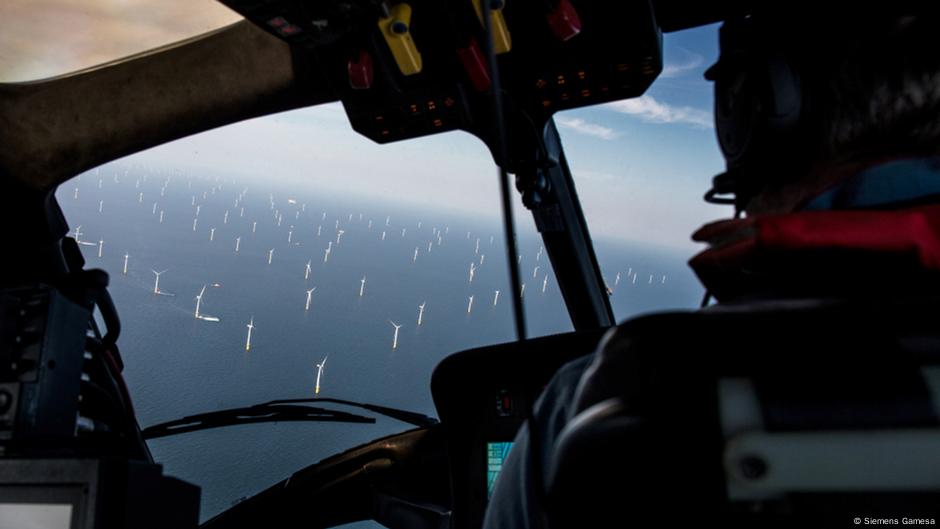
Various elements have impeded the expansion of wind energy, such as the permit acquisition stage, along with manufacturing and construction processes, each potentially taking several years. However, regarding this final aspect, prospects might be improving for the wind industry—particularly within Germany.
In 2024, regulators approved more than 2,400 new onshore wind turbines with a total output of around 14 gigawatts, a record high, said an industry report in January. Robert Habeck, Germany's outgoing climate and economic affairs minister, credited that boost to his coalition government's efforts to "simplify and accelerate" the approval process.
Wind continues to be one of Germany's foremost energy resources. Approximately 59% of the nation's electricity needs for 2024 were met through wind power. renewable sources , with over half coming from wind sources, as stated by the federal energy regulator.
Despite the difficulties, industry experts such as Fingerle from Winergy think that innovation might reveal fresh opportunities for wind energy development.
"I am fairly optimistic for the next 10 to 15 years that the competition for greater power outputs will continue — particularly due to the innovative pressures coming from China," he stated.
Martin Kuebler provided input for this report.
Edited by: Tamsin Walker
Author: Kai Steinecke

Comments
Post a Comment