Why Caste Bias Persists in India's Top Tech Universities
The top technological institutes in India are renowned for providing excellent education and abundant career prospects. Nonetheless, these advantages frequently only extend to students from more privileged backgrounds.
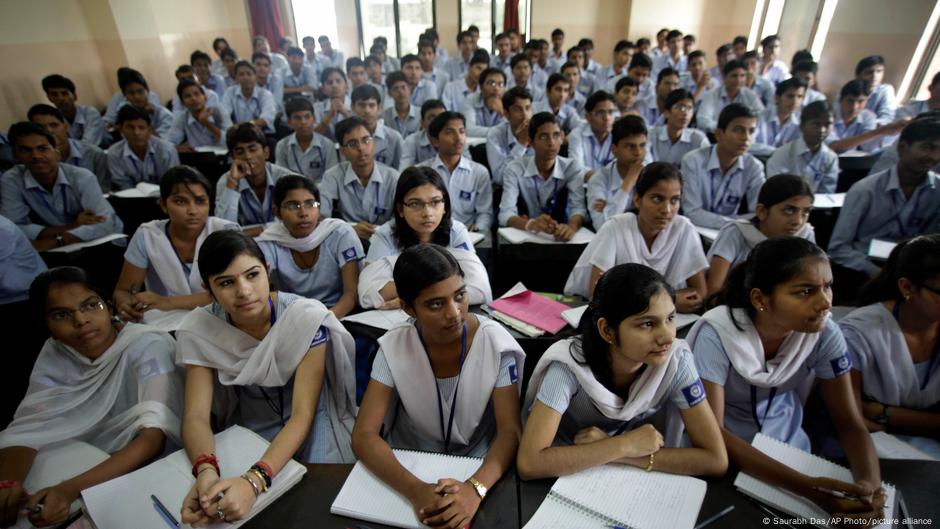
When Amit (name altered upon request) entered the Indian Institute of Technology in Delhi, he felt overjoyed.
"I was thrilled to study at such a prestigious institution and the opportunities it would provide me," he shared with inspiridences.
Given the rigorous entrance examinations and the attractive high-salary job prospects they offer to their alumni, the Indian Institutes of Technology (IIT) stand out as some of the country’s most esteemed educational institutions in India.
The IITs form a network of 23 institutions. institutions renowned for their outstanding quality In fields related to research, science, and technology studies, their acceptance rate is notoriously competitive, typically fluctuating between 0.5% and 2.5% throughout the institute network.
"What caught me off guard was the deep-seated caste discrimination at the institution. During my initial year, I experienced significant weight loss and frequently felt out of place. Despite this, I resolved to persevere; however, it has certainly not been an effortless journey," Amit stated.
"After coming to know that I am from the reserved category, my classmates started treating me differently," he added, referring to affirmative action policies enshrined in the Indian constitution to uplift communities that are historically part of the lowest rungs of the country's caste hierarchy.
Caste determines a person's social status in many South Asian societies, and those considered to be from "lower" castes face systemic discrimination .
My higher-caste peers formed their own groups, making me feel left out and alone. Others would casually remark that there were more qualified applicants, implying I was admitted solely because of my caste.
Caste discrimination on campus
Amit’s situation is not uncommon. According to a 2019 study conducted at IIT Delhi—the latest data accessible—75% of students belonging to historically underprivileged castes encountered discrimination via casteist comments.
The research also revealed that approximately 59% of students belonging to the "General Category," which encompasses individuals from traditionally advantaged castes, either concurred with or remained unconcerned about such caste-related comments.
Institutions supported by the government in India set aside a certain percentage of places for historically underprivileged communities as part of their initiatives to promote fairness. Nonetheless, numerous students and educators from higher castes and general categories argue that this practice compromises the principle of meritocracy.
"The IITs are prestigious institutions where traditionally the upper-caste, middle-class individuals aspire to study. These institutions have been their exclusive domains up until recently, before reservation policies began being properly enforced," said Professor Surinder Singh Jodhka from Jawaharlal Nehru University during an interview with inspiriences.
He noted that students from disadvantaged backgrounds "are perceived as benefiting due to reservations, whereas those from the general category view it as recognition of their merits."
"As this dichotomy is structured rather peculiarly, it has become entrenched over time. It is accepted without question and spans everything from admissions processes to hiring practices," stated Jodhka.
What kind of discrimination do students encounter?
A student from IIT Bombay, who chose to remain anonymous, informed Inspirience that an individual’s caste status frequently becomes apparent through their last names. Numerous Indian family names carry associations with specific castes and identities.
"A form of separation exists among students based on their caste. Despite some higher-caste classmates being more amicable towards you, they may still make offhand caste-related comments, refer to us as 'quota children,' or post content opposing reservation policies on social media," the student shared with inspiridences.
Recently, IIT campuses have begun hosting chain restaurants and coffee shops within their premises. These establishments are often too expensive for many students from underprivileged backgrounds, leading to increased feelings of exclusion," he noted.
The incident involving Darshan Solanki, a freshman 18-year-old who passed away due to suicide in 2023, remains vivid for numerous students.
His loved ones and acquaintances stated that he encountered caste discrimination at the institution prior to passing away. Nevertheless, an investigation conducted by the university concluded that they found "no concrete proof" of such treatment based on caste.
"Often, the story goes that these students ended their lives because of academic stress or other issues. They never seem interested in exploring our experiences which make it incredibly difficult to concentrate on studies," Amit stated.
Narayana Sukumar, a political science professor at Delhi University, informed inspirience that when a student commits suicide on campus, the administration attempts to appease the parents and assures them that all necessary actions will be taken.
Sukumar, author of a book examining caste-based discrimination and exclusion in Indian universities, stated, "They won’t permit any form of protest inside the campus. If you attempt to orchestrate such demonstrations, the administration seeks to punish the students involved. It’s an environment where all dissenting voices are completely suppressed."
In what ways have universities addressed caste-based discrimination?
In recent times, numerous Indian Institutes of Technology (IITs) have established what are known as Scheduled Caste/Scheduled Tribe (SC/ST) cells aimed at combating caste-based discrimination. The purpose of these entities is to handle students' grievances and guarantee that reservation policies are correctly enforced in both admissions processes and recruitment procedures.
Several institutions, such as IIT Bombay, have taken additional steps by implementing caste sensitivity programs and carrying out surveys to gauge discrimination within their premises.
India's Ministry of Education directed government-funded universities, including IITs, to fill all reserved faculty positions by September 2022.
Data retrieved through a right-to-information request by the Ambedkar Periyar Phule Study Circle (APPSC), an advocacy organization for students at IIT Bombay, revealed that 14 departments at IIT Delhi and eight at IIT Bombay did not have any faculty members from reserved categories as of 2023.
In response, IIT Bombay’s director Shireesh Kedare issued a statement indicating that the institute was working towards recruiting high-caliber applicants, noting that frequently individuals from the general category would apply rather than those from reserved categories.
"Indeed, having a varied teaching staff would make a significant difference. Nonetheless, the transformation also needs to start from the leadership level. There should be more awareness and proactivity among IIT directors regarding caste-related matters. Ideally, the SC/ST cell should focus on student support; however, it currently serves the interests of the institution," stated Sukumar.
*Editor’s Note: If you’re experiencing severe emotional distress or having suicidal thoughts, please reach out for professional assistance immediately. Regardless of your location, you can locate resources for support at www.befrienders.org .
Edited by: Wesley Rahn
Author: Tanika Godbole (based in New Delhi)

Comments
Post a Comment