Billion-Dollar U.S. EV Plans Stall as China Accelerates Forward
Investments in electric vehicles are collapsing due to policy uncertainties, allowing China to pull further ahead.
Under the Biden administration’s Inflation Reduction Act , the U.S. was on track to meet all its battery demand for electric vehicles from local manufacturing by the end of the decade. Now, the country may not reach that goal as billions of dollars worth of clean energy projects have stalled in Q1 2025. The U.S. is in a far better position to adopt EVs than before, but that momentum now risks stalling, as EVs become collateral damage in tariff wars, helping China further its lead.
Welcome to the Friday issue. Critical Materials Here's your daily summary of news and developments influencing the electric vehicles sector, software-defined automobiles, and autonomous driving technology. Today, we're also looking at predictions for how significantly Japanese car manufacturers might be affected by President Trump’s actions. sweeping tariffs Regarding imported products, Toyota is also aiding its suppliers by covering the substantial expenses of components due to tariffs.
30%: Is Progress on America’s Clean Energy Initiatives Slowing Down?
The straightforward response is that certain initiatives have come to a halt, while those that have finished are modifying their strategies due to reduced production levels and the impact of Trump's tariffs. The figures speak for themselves: up until last year, approximately $1 billion worth of clean energy manufacturing projects were unveiled monthly in the United States, as reported by the clean energy advocacy organization E2. However, this figure dropped sharply to $176 million in January.
What’s going on? During his campaign, President Trump strongly opposed ending the initiatives launched under the Biden administration focused on electric vehicles (EVs), charging infrastructure, and battery production. These efforts were designed to decrease America’s dependence on China and shift away from climate-changing fossil fuels. Once Trump assumed office in January, these investments began to decline.
The halted initiatives encompass a $1 billion project. Aspen Aerogels The firm, having secured research funds from NASA and focusing on developing flame retardants for electric vehicle batteries — including supplying them to General Motors — declared that it would be relocating its manufacturing operations to its other current facilities across the United States, as well as in China and Mexico.
The battery firm Kore Power, which had intended to construct a $1 billion facility in Arizona, terminated that project in January, as reported. local news reports From Phoenix. Additionally, Trump famously halted funding for the National Electric Vehicle Infrastructure (NEVI) program during his initial days in the Oval Office. The NEVI initiative was designed to establish a comprehensive fast-charging network across major highways in the United States.
Here’s an in-depth look from The Washington Post on the stalled projects:
"It’s challenging for manufacturers in the U.S. right now due to uncertainties surrounding tariffs, tax incentives, and regulatory changes," explained Tom Taylor, a senior policy analyst at Atlas Public Policy. He also mentioned that hundreds of millions of dollars in potential new investments seem to be held back, although they have not officially been scrapped yet.
As a result, businesses that had committed resources to producing components for American electric vehicles are now retracting their investments and scrapping plans.
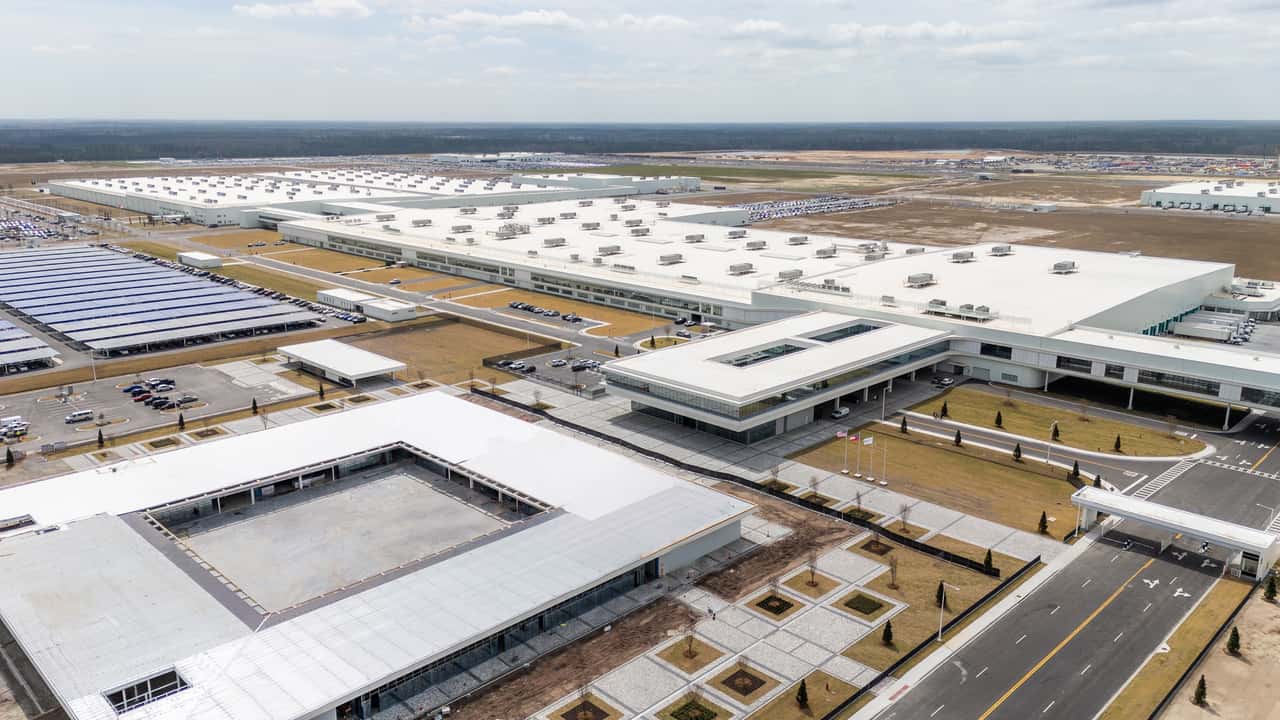
Nevertheless, numerous other Original Equipment Manufacturers (OEMs) have not just finished constructing their electric vehicle (EV) factories and battery production facilities but have also strengthened their dedication, even following Trump’s presidency takeover. Recently, Hyundai inaugurated its $7.6 billion Metaplant in Georgia last week, Ioniq 5 and Ioniq 9 Electric sport utility vehicles are presently being manufactured, with additional hybrid and electric models anticipated to join them soon.
Hyundai is constructing a $5 billion steel facility in Louisiana following President Trump's imposition of 25% tariffs on imported steel and aluminum. Numerous additional initiatives, such as Toyota’s battery plant in North Carolina, LG Energy Solutions’ plant in Arizona, and Ford’s BlueOval Battery Park in Michigan, have either reached completion or remain scheduled for production.
Therefore, it's not entirely bleak.
However, the U.S. is far from matching China’s progress, as NEVs make up almost half of all new vehicle sales in China. Data from Cox Automotive shows that electric vehicles constituted only 8.1% of total vehicle sales in the United States in 2024. Furthermore, protectionist measures and an administration hostile toward EVs are facilitating China’s growing lead in this sector.
60%: Tariffs Could Cost Japanese Car Makers $24 Billion, Says Report
Japan's leading automakers may see their financial statements disrupted as the expense of tariffs for the nation's top seven automotive companies might surpass 3.5 trillion yen ($24 billion). Nikkei citing information provided by UBS Securities. Toyota alone makes up half of this total, equating to an impressive 1.8 trillion yen ($12 billion).
Here’s more from Nikkei this morning:
"Japanese automakers may likely need to undertake certain measures, like shifting production to the United States," stated Kohei Takahashi, an analyst at UBS.
According to the Japan Automobile Manufacturers Association (JAMA), over 30% of all Japanese vehicle exports in 2023 were destined for the United States, establishing it as the top individual country for these exports. Data from Japan’s Ministry of Finance revealed that automobiles comprised approximately 30%, equivalent to six trillion yen, of overall shipments from Japan to the U.S. in 2024.
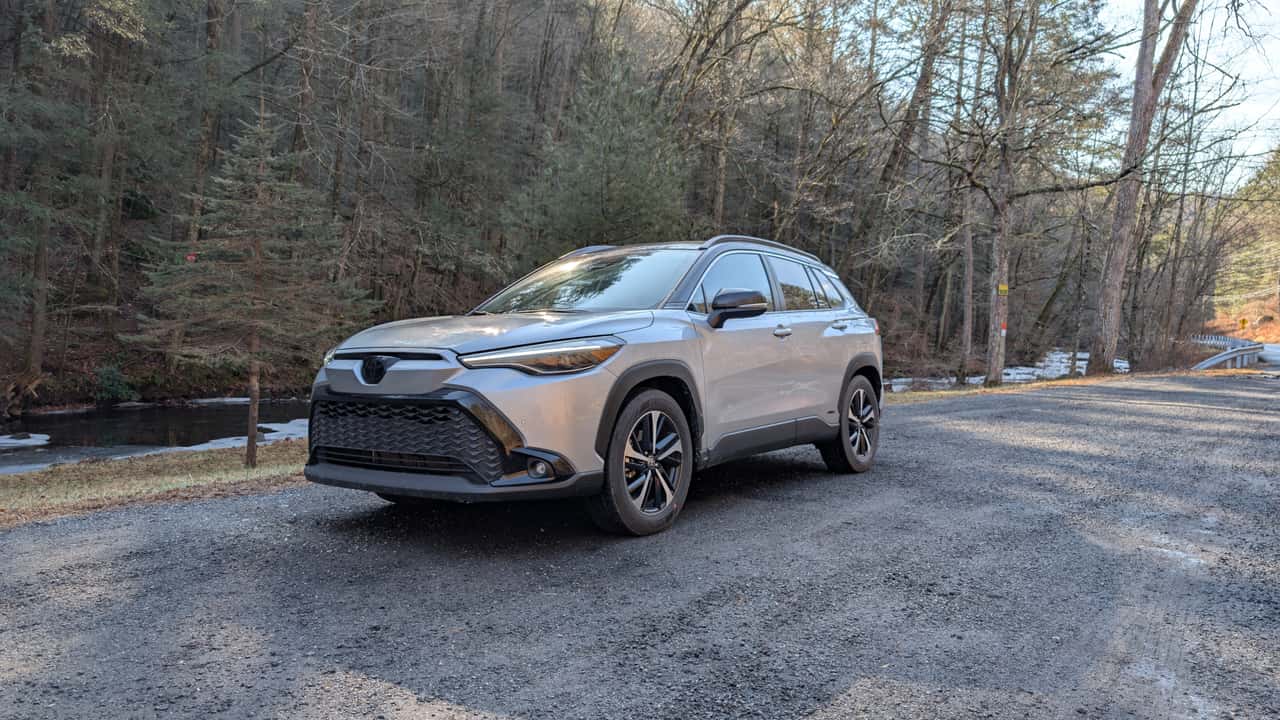
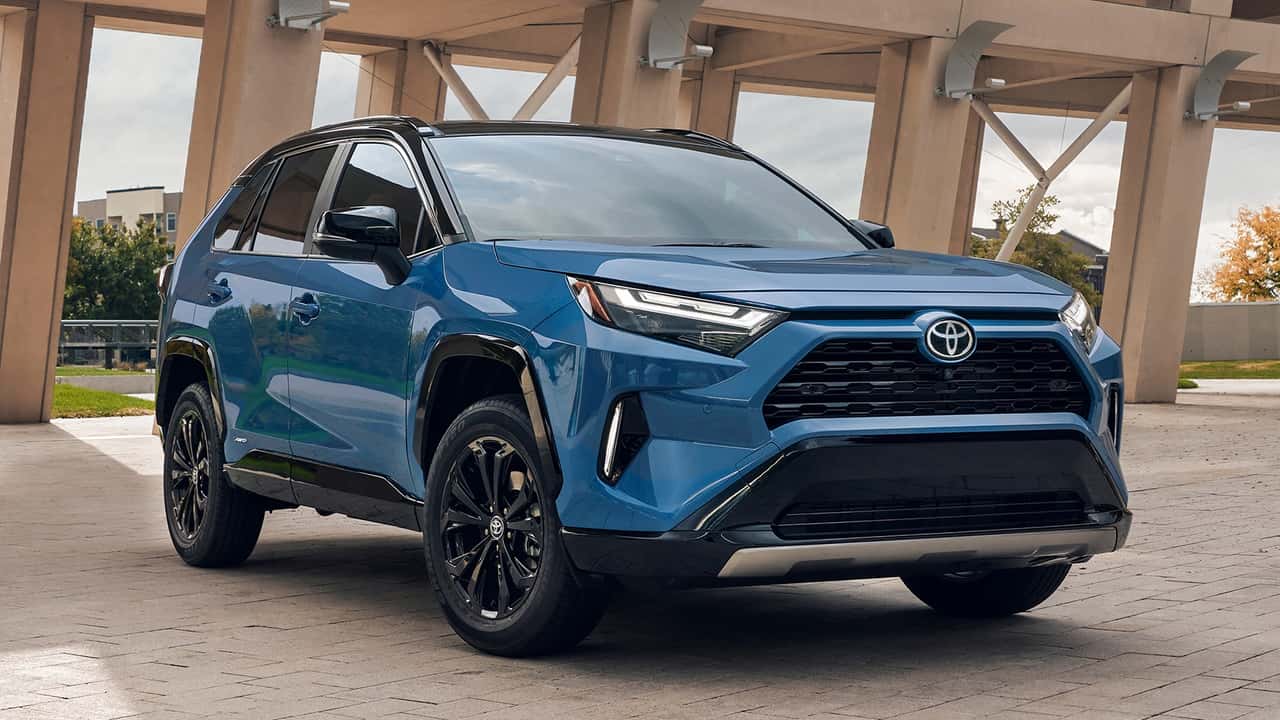
The demand among Americans for Japanese crossover vehicles and SUVs is substantial. Models such as the Toyota Corolla and RAV4 have consistently ranked as top sellers in the United States over many years. Nevertheless, the RAV4 is produced in Canada, and despite the fact that the Corolla is assembled domestically, roughly 25 percent of its component parts originate from Japan, as stated under the guidelines of the American Automobile Labeling Act.
Trustworthy and budget-friendly Japanese cars have long been the preferred option for numerous American households. However, their prices are now poised to increase significantly.
90%: Toyota Will Compensate Suppliers for Tariff Expenses
Larger entities within the U.S. automotive sector may handle tariff impacts more effectively compared to smaller participants. This trend is evident, with Toyota's North American branch notifying its suppliers that they will cover additional expenses related to components sourced from Mexico and Canada, as reported. Nikkei .
The finer details of how it will assist its suppliers are being worked out. However, it’s unclear how long Toyota will continue to absorb the costs of tariffs. As we’ve reported before, even the most American-made cars, like the Tesla Model Y , consist of roughly 70% domestically sourced components. The remaining portion is imported, primarily from Mexico or Canada.
Over the last several months, uncertainty has been the primary disruption in the automotive sector. Despite the tariffs being settled, it remains uncertain whether Trump will provide any trade concessions to U.S. partners in the near future. As he mentioned on Thursday , he remains receptive to reducing tariffs but only if countries provide the U.S. with something "extraordinary" as compensation.
100%: What Impact Are The Tariffs Having On Your Pocket?
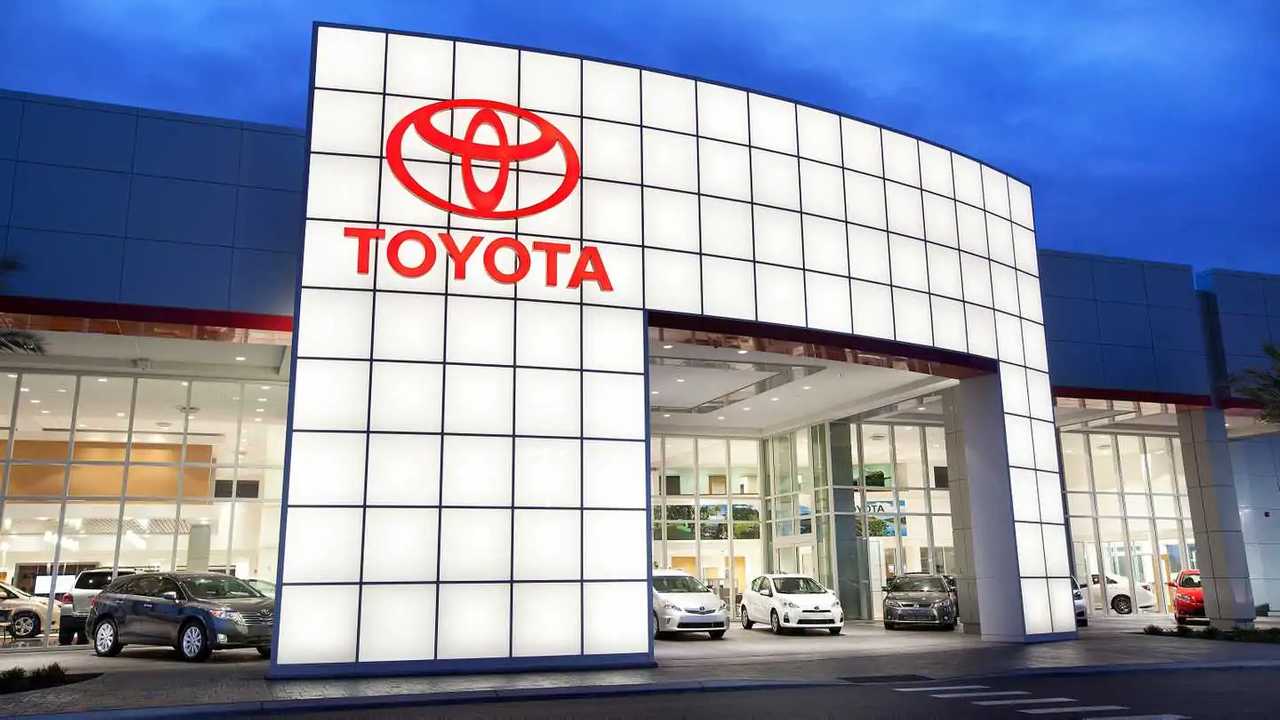
Car manufacturers sold an all-time high number of vehicles, encompassing electric cars and hybrid models. in the first quarter . Customers flocked to dealerships, particularly in March, eager to secure a good deal before price hikes resulting from tariffs took effect. Did you join the March frenzy? Or are you considering waiting for stability to return? Share your views in the comments section.
Got a suggestion? Reach out to the author: Suvrat.kothari@insideevs.com
Related Stories
- From Tesla to Toyota: How Software Is Rewriting the Rules of Automotive Industry
- How Tariffs Affect America's Electric Vehicle Competition
- Skoda’s Most Affordable Electric Vehicle Receives a Sporty Hatchback Transformation
- GM's Top-Selling Electric Vehicle Might Surprise You

Comments
Post a Comment