Mainland China scientists build electronic war game for Taiwan and nearby waters
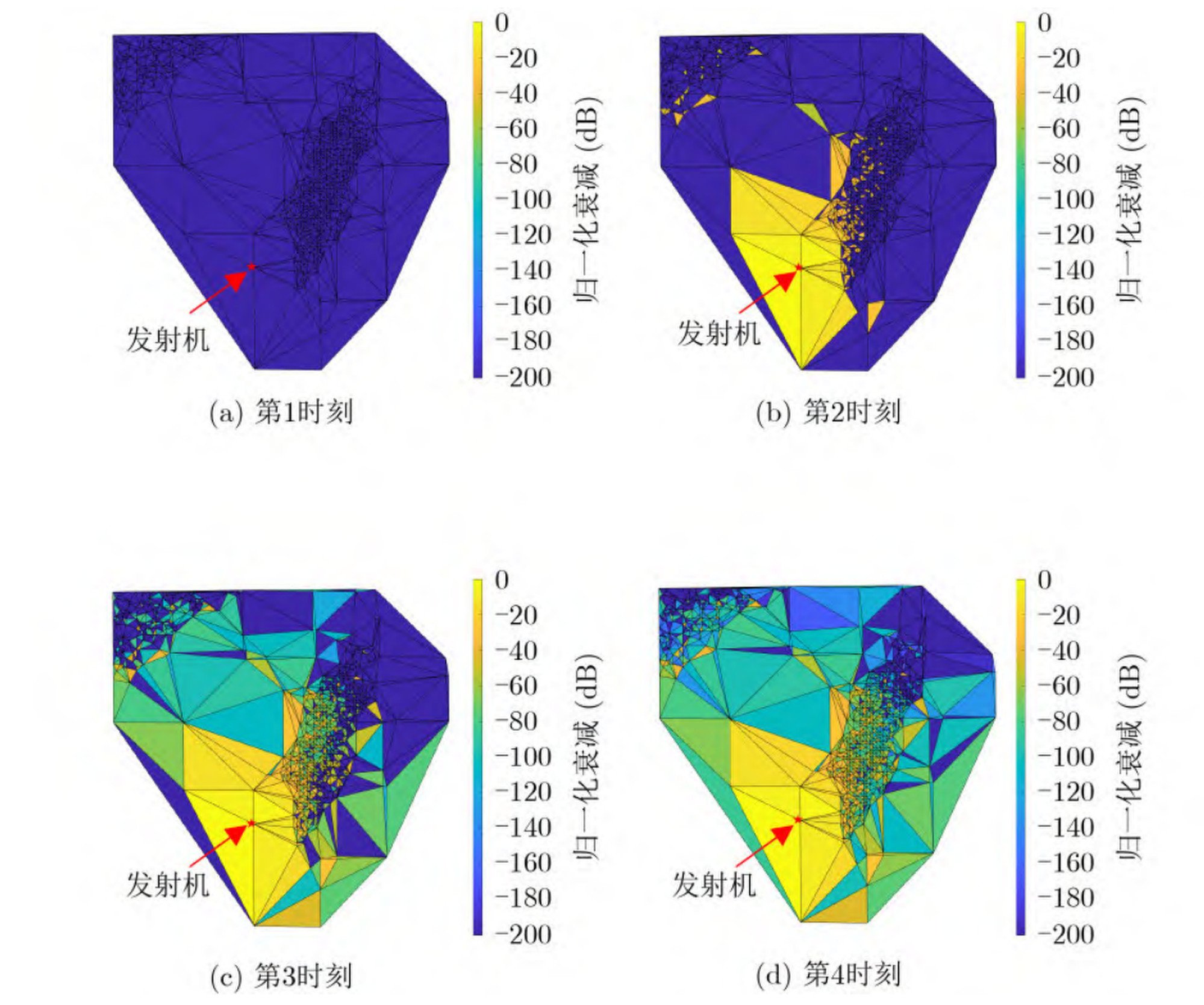
A PLA mobile electronic warfare platform deployed southeast of Taiwan activates its emitter, shattering the electromagnetic silence with powerful pulses, which are initially blocked by the island’s towering central mountain range.
But while the key eastern military bases are unaffected at first, gradually the signals navigate the complex terrain, reflecting like mirrors off slopes and scattering across rough surfaces.
Eventually, they cross the peaks to blanket the entire island and its surrounding waters. Signals in parts of eastern Taiwan could rival the strength of those in the west. Even distant Taipei detects disturbances, though some shielded valleys remain signal-free – potential hideouts that require vigilance.
Do you have questions about the biggest topics and trends from around the world? Get the answers with SCMP Knowledge , our new platform of curated content with explainers, FAQs, analyses and infographics brought to you by our award-winning team.
This war game scenario is played out in an ultra-detailed simulation that for the first time covers a vast theatre spanning Taiwan and adjacent seas, modelling intricate landforms with nanosecond-level precision.
The simulation was created by an electromagnetic battlespace emulator built by a team of researchers led by professor Shao Shihai from the University of Electronic Science and Technology in Chengdu, the capital of the southwestern province of Sichuan.
“This method significantly improves computational speed while maintaining precision and high time-delay resolution,” they wrote in a peer-reviewed paper published by the Chinese-language Journal of Electronics & Information Technology in March.
“[It] fulfils the computational requirements for channel modelling in large-scale battlefield environments,” they added.
Previously, such high-fidelity simulations were confined to small indoor settings due to overwhelming computational demands. Traditional ray-tracing and electromagnetic scattering methods struggled with complexity, often missing critical battlefield windows.
According to the paper, the team solved this problem with an “iterative time-domain radiosity algorithm” – an innovation that slashed computation time 10-to-a-hundred-fold without losing accuracy.
Unlike traditional approaches such as the frequency-domain method, it maintains precision even in massive terrains by reusing and adjusting prior signal data across time steps and prioritising key reflections. It even runs smoothly on ordinary laptops without specialised graphics hardware, the paper said.
The researchers said the algorithm was validated across a 500 sq km (311 square miles) digital terrain with 1,469 surface elements, achieving near-perfect signal accuracy while cutting processing time by more than an order of magnitude compared to conventional methods.
“This bridges precision and speed,” they emphasised. The technology’s practicality for equipment testing and combat drills was significant, with China in a race with the US to develop such capabilities, the researchers added.
“Conducting tests, training, and exercises for electromagnetic spectrum warfare equipment in large-scale battlefield environments proves logistically demanding and exorbitantly expensive,” they wrote.
“To address this, the US Department of Defence initiated the digital radio frequency battlespace emulator (DRBE) program, aiming at establishing a massive-scale digital electromagnetic environment.”
According to the Pentagon’s research and development arm DARPA, the DRBE program aims to “create the world’s large-scale virtual radio frequency (RF) environment for developing, training, and testing advanced RF systems, such as radar and electronic warfare (EW) systems”.
Six years on, the emulator is still under development, according to DARPA’s website.
Passionate about science? Dive deeper with the Dark Matters newsletter, a weekly in-depth analysis on China’s rise in science, technology and military that goes under the surface. Sign up for free now.
More from South China Morning Post:
- Civilian group hosts Taiwan tabletop simulation of attack from mainland China
- How Ukraine’s Operation Spider’s Web attack on Russia holds important lessons for China
- Illegal entry from mainland China raises alarms about Taiwan’s maritime security
- Beijing ‘flexible’ in courting Taiwan allies as Haiti, St Lucia attend mainland forum
For the latest news from the South China Morning Post download our mobile app . Copyright 2025.

Comments
Post a Comment