China’s J-20 stealth fighter’s radar leap credited to semiconductors expert Xu Xiangang
China’s J-20 stealth fighter has tripled its radar detection range, thanks to semiconductor advancements over the past two decades led by Shandong University scientist Xu Xiangang, according to the university.
A silicon-carbide (SiC) semiconductor material developed by Xu’s team had powered a threefold increase in the detection range of phased array radar systems, allowing Chinese radars to swiftly detect enemies and gain the first-mover advantage, the university said on its social media page.
“From the J-20’s on-board systems to advanced weaponry, this ‘Chinese chip’ is crucial for national security,” the May 30 post said.
Do you have questions about the biggest topics and trends from around the world? Get the answers with SCMP Knowledge , our new platform of curated content with explainers, FAQs, analyses and infographics brought to you by our award-winning team.
“It enhances the range of Chinese radars, improves missile accuracy and boosts the power of laser weapons, making it an indispensable ‘hardcore shield’ in defence technology.”
The J-20, also known as the Mighty Dragon, is a twin-engine stealth fighter viewed as China’s answer to America’s F-22 “Raptor”. It officially entered active service in March 2017.
Xu, who is dean of the university’s Institute of Novel Semiconductors, said it was important for researchers to address the country’s needs.
“The United States had already applied semi-insulating SiC on its F-35 stealth fighter jets and the Terminal High-Altitude Area Defence [THAAD anti-missile] system. Without [high-performing] radar, even the best-performing aircraft cannot be effective,” he noted in a video interview accompanying the post.
In 2016, China strongly protested against US plans to deploy its THAAD missile defence system in South Korea, citing risks to its strategic deterrence and security interests. China has since developed its own advanced anti-ballistic missile system, the HQ-19, which debuted last year.
Meanwhile, the United States and its allies have in recent years stepped up efforts to curb China’s access to advanced chips, including for use in weapons systems and the development of artificial intelligence.
“When our country needs such material but cannot source it [from foreign countries], our team dedicates our efforts to developing technologies to produce high-purity semi-insulating SiC crystals,” Xu said in the video.
He said the development of home-grown high-end equipment once faced challenges including “inability to grow, poor quality, and subsequent difficulties in the processing” of SiC semiconductors.
“We were not even able to produce a substrate that met basic standards 20 years ago,” said Xu, who is also director of the State Key Laboratory of Crystal Materials at the university. “Now we can adjust and control the material growth precisely.”
In addition to military advances, the semiconductor material can also improve battery longevity and increase the travel range of electric vehicles, Xu said, while pointing to possible applications in smart electric grids, quantum communications and space exploration.
Silicon carbide, a compound of silicon and carbon, is an extremely hard semiconductor material suitable for high-power devices at temperatures much higher than conventional semiconductors.
As a wide bandgap semiconductor material, it can withstand voltages at least 10 times that of conventional silicon-based semiconductors before breaking down, making it ideal for high-frequency devices.
After its discovery by an American inventor in 1891, SiC has been used in cutting tools, heating elements for industrial furnaces, and semiconducting substrates for light-emitting diodes.
Xu began researching SiC-based semiconductors in 2000, according to his bio on the university website. He made significant advancements in growth mechanisms, developing high-purity semi-insulating properties, and focused on equipment development and industrialisation, the profile states.
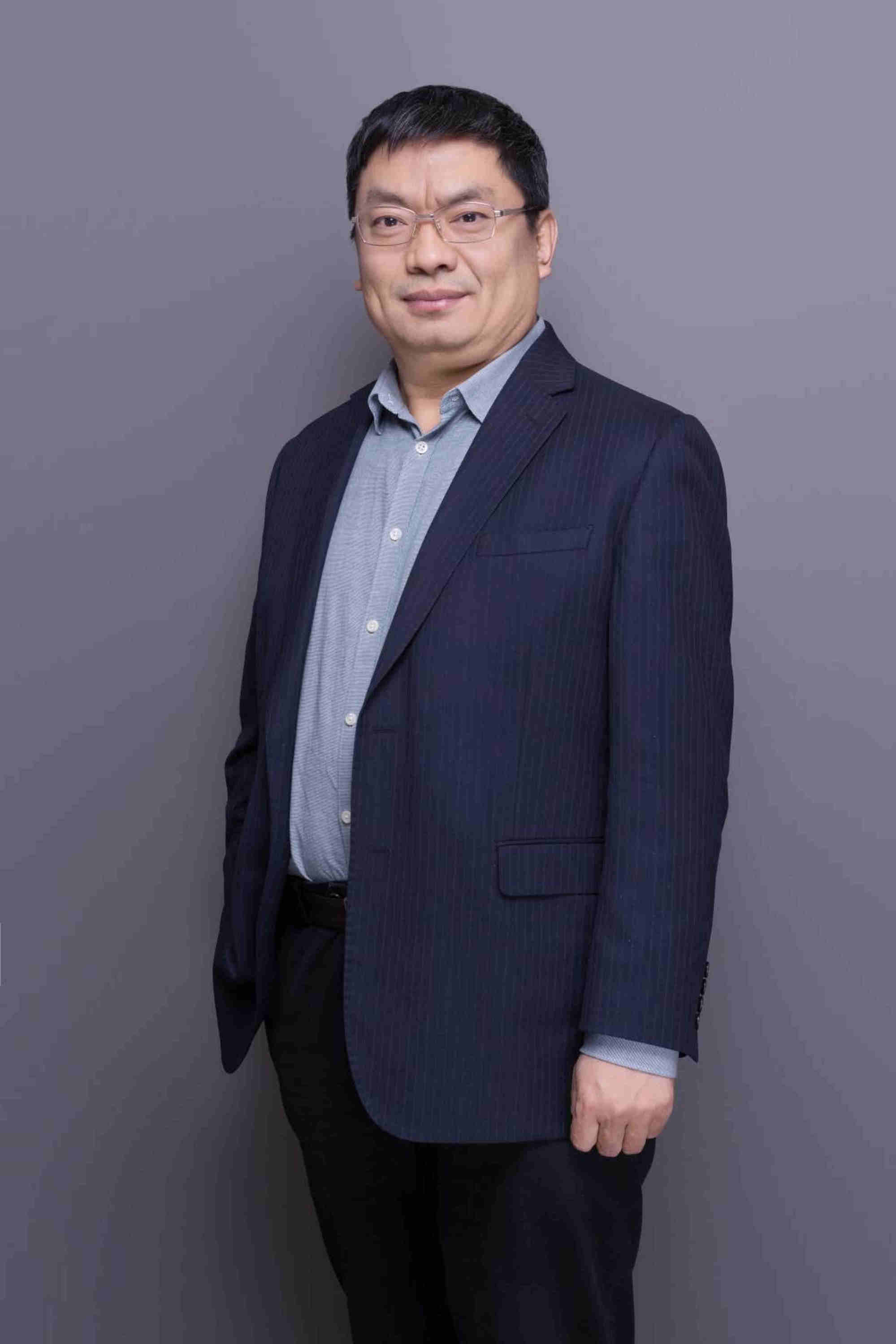
His key breakthroughs include scaling SiC single crystal growth from around 5cm to 30cm in diameter (2 to 12 inches) in diameter and producing high-purity, semi-insulating SiC.
These advancements made it possible for SiC materials to be integrated into core parts of radar systems, which have been applied in advanced military aircraft, guided missiles and large warships.
His patented technologies have been transferred to noted SiC producers such as Shandong-based SICC and Guangzhou Summit Crystal Semiconductor.
“[Xu’s research] has fostered a group of industry leaders in this field, broken foreign blockages, achieved self-sufficiency and made significant contributions to the development of the country’s military weapons,” the university said.
Xu’s research in semiconductor materials and devices dates back to 1989 and his work has supported advancements in semiconductor lasers, light-emitting diodes and heterojunction transistors, according to his profile.
His research has also enabled the local production of materials related to semiconductor lasers and chips, serving key national projects like laser weapons.
More from South China Morning Post:
- Can China’s new stealth tech challenge Trump’s Golden Dome?
- AI and robotics expected to play a big role in China’s next 5-year plan
- Tech war: Chinese institute begins photonic chip production despite US curbs
- Tech war: Huawei founder Ren says state-of-the-art chip performance can be achieved
- Beyond 1s and 0s: China starts mass production of world’s first non-binary AI chip
For the latest news from the South China Morning Post download our mobile app . Copyright 2025.

Comments
Post a Comment